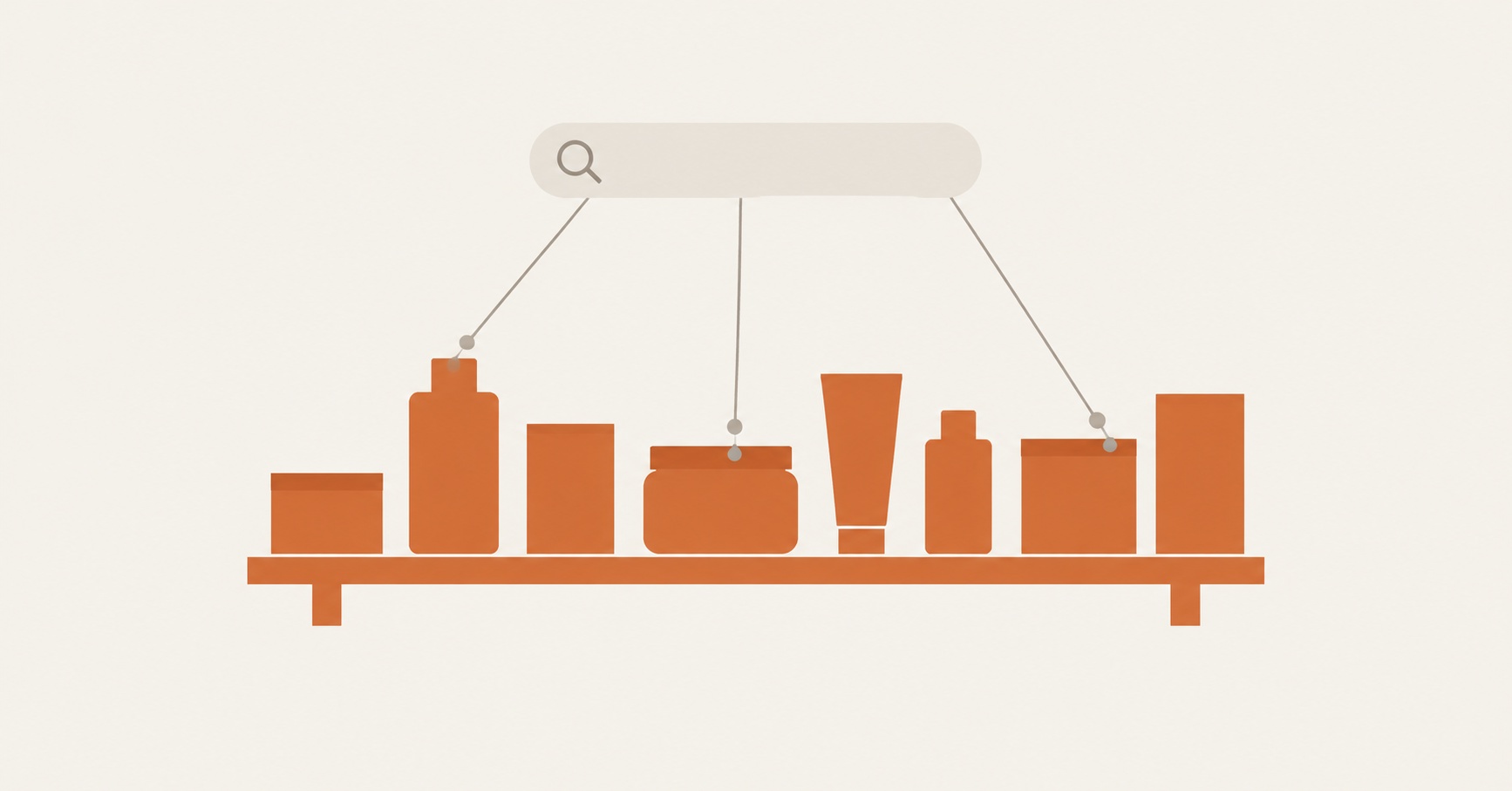
GEO vs SEO for a product catalog means comparing AI recommendations with search rankings: SEO targets visibility in search results, while GEO targets inclusion in generated answers. Both need understandable, accessible product information, though evidence that a page is easier to classify does not prove an assistant will recommend it.
Most GEO vs SEO pages miss stores
Advice about GEO often concerns getting an article quoted: answer the question early, add statistics, cite authorities and earn mentions. Such advice fits a blog post competing to be a source, and a product page competes for a different outcome. When a shopper asks an assistant for the best compact sauna, the assistant is choosing a product, and it judges the product on what it is, which category it belongs to and whether its page answers the buyer’s practical questions.
A catalog needs a product-level check because a useful article and a suitable purchase answer different questions for a shopper: a cited buying guide can help the assistant explain a category without including your product among its recommendations.
Signals both systems reward
Some work can support both channels, and we call these the shared signals: the parts of a product page that help a search engine rank it and help an assistant understand it. A product title that names the product type (“12-inch cast iron skillet”) serves both. So does a page that loads quickly and that crawlers can reach, a description written in plain text, and Product structured data that matches what the page shows.
The overlap starts with a common requirement: both systems need enough accessible information to identify what a page describes. A search engine and an assistant both need to work out what the page is about before doing anything else with it. Anything that makes that first step easier helps both, and anything that makes it harder (a title made of brand words, a description locked in an image, schema that contradicts the visible price) hurts both.
Signals that matter more to assistants
Category filing is the clearest case. Metrisque’s Category Fit compares each product with the category a shopper would expect and marks it Outside when Gemini similarity falls under 0.40. In the latest read for 53 stores, 13 of 923 products were Outside. That score flags a possible mismatch for review; it does not measure how often an assistant recommends the product to shoppers.
Description clarity is the other. In a synthetic test on stored products, models classified products into the correct category from clear descriptions 150 of 150 times, and from vague descriptions 116 of 150 times. This measures classification in a synthetic task, with no measured effect on search rankings, buying recommendations or sales conversion.
Third-party sources deserve a separate check because an assistant may cite a page that your store does not control. Metrisque’s Competitors and Citations view shows that assistants answering buying questions with web search often lean on review sites, marketplaces and comparison articles. A backlink and a favorable product description are different observations, even when they appear on the same third-party page.
Signals that matter more to search engines
Traditional SEO work remains useful, although this draft contains no controlled comparison of ranking signals against AI recommendation signals. Keyword placement, internal anchor text and backlinks belong in a search audit, but their relative importance to assistants is unmeasured here.
Assistants using web search can encounter product pages through search results, so discoverability still belongs in your catalog plan. An accessible page gives a retrieval system something to read; inclusion in a generated answer depends on the question, available sources and the assistant's response. Treat SEO and GEO as related checks with separate outcomes rather than interchangeable measures of success.
| Signal | What SEO rewards | What an assistant reading a product page appears to rely on | Evidence |
|---|---|---|---|
| Product title | Keyword match, click appeal | The product type and category noun | Varied by model and product (Metrisque synthetic tests) |
| Description | Unique, keyword-relevant copy | A plain first paragraph naming the product, buyer and specifications | Measured: clear 150 of 150 correct, vague 116 of 150 (Metrisque) |
| Category and breadcrumbs | Site structure, internal links | A consistent statement of where the product sits | Category Fit: 13 of 923 Outside (Metrisque), breadcrumb effects varied |
| Structured data | Rich results eligibility | Potential supporting information on type, price and availability | Not measured by Metrisque |
| Backlinks | Authority and ranking | What cited third-party pages say about the product | Observed in Competitors and Citations views (Metrisque), no effect size |
| Reviews | Star ratings in results, click rate | Possible source of product praise or complaints | Not measured by Metrisque |
| Page speed and crawlability | Ranking factor, indexation | Whether web search can fetch and read the page | Not measured by Metrisque, follows from how web search answers work |
Table 1. Only the description row carries a clean measured result. Rows marked “varied” or “not measured” are reasonable practice that a store should test on its own catalog before rolling out.
From ambiguous copy to explicit product information
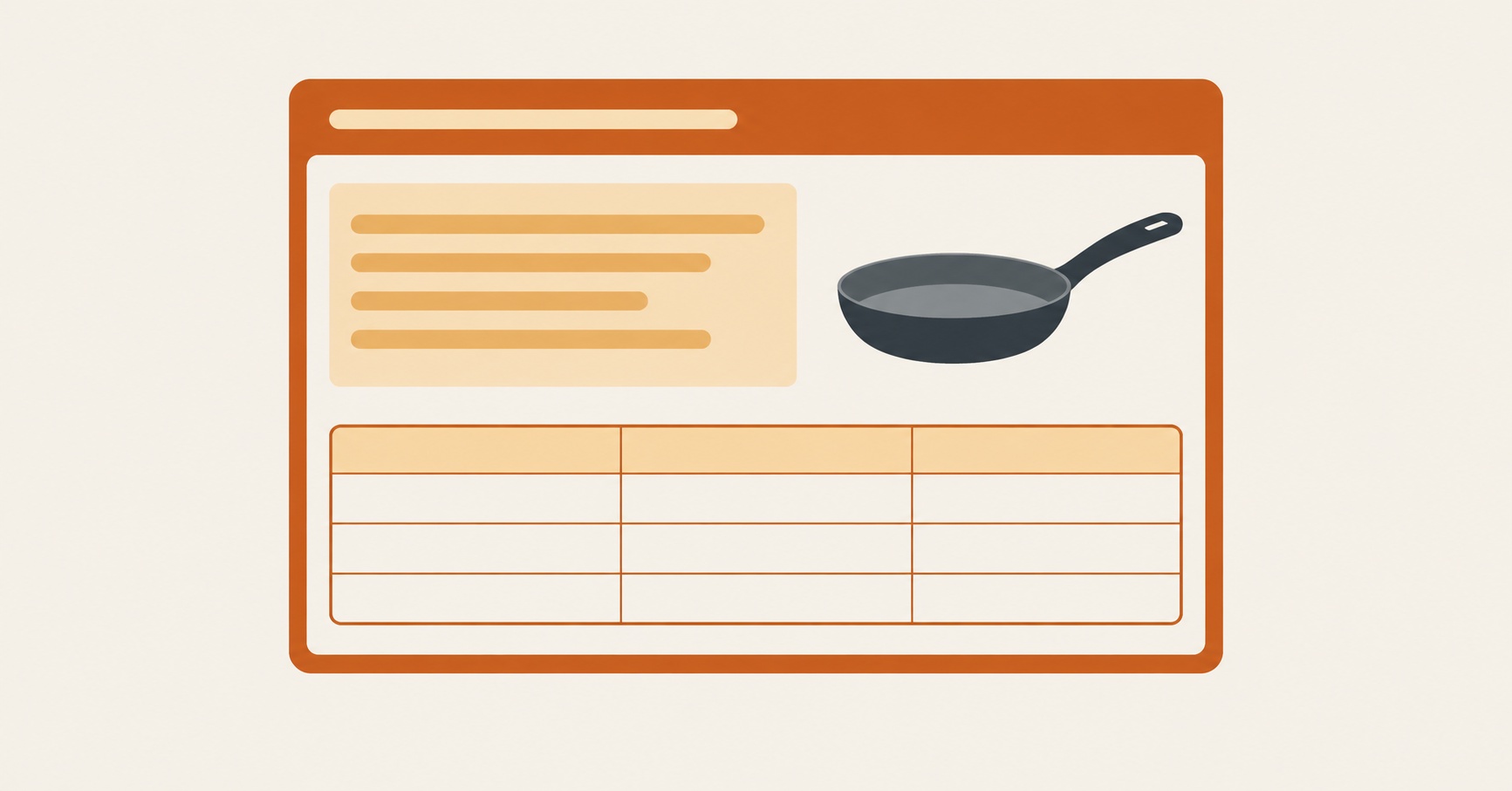
A before-and-after view makes the editing task concrete without implying that we have measured the relative importance of every signal. The revised page identifies the product type, describes relevant specifications and places it in a recognizable category for shoppers.
A worked example from a single product
An example makes this concrete. Take a generic product, a 12-inch cast iron skillet, sold by a cookware store. Its SEO-tuned page might carry the title “Ironfield 12 | Pre-Seasoned | Free Shipping”, a description that opens with the founder’s story about family dinners, and a breadcrumb trail of Home, then Shop, then Best Sellers. Search engines can still rank that page for “ironfield 12” because the brand name matches exactly, and the store’s backlinks lend it authority for broader terms over time.
An assistant asked “what’s a good cast iron skillet for an induction hob?” has a harder job with the same page, because none of the first three things it reads say “cast iron skillet”, “12-inch” or “induction compatible”. A version written for both channels changes three lines: the title becomes “Ironfield 12-inch cast iron skillet, pre-seasoned”, the description opens with what the pan is, its size, its weight and the hobs it works on, and the breadcrumb runs Home, then Cookware, then Skillets. These edits make the page more explicit, although their effect on search rankings and recommendations would still need testing.
A working order for a catalog
Start with shared signals because shoppers, search systems and assistants all need to understand what the product actually is. Fix titles that hide the product type, and rewrite descriptions whose first paragraph does not name the product and its buyer. Then check the possible category mismatch: check each high-revenue product’s category filing, and read the sources assistants cite for your top buying questions to see who they name.
SEO still feeds GEO. Keep the SEO-first work running alongside. A store that drops link building or technical SEO to chase AI answers may find that its pages drop out of the web searches assistants run. Our guide to generative engine optimization for online stores sets out the full order with the reasons behind each step.
Separate reads for each channel
Each channel needs its own read. When a store makes changes for both channels at once, it needs a way to tell which one responded. Search rankings and traffic come from search console data. AI recommendations need their own read: the same buying questions asked of each assistant, on memory and on web search, with position recorded before and after. Metrisque’s Action Plan stores a re-measure after each fix for this reason.
One caution applies to every row of Table 1: in Metrisque’s synthetic tests, similarity scores did not predict what a model recommends. A change that makes a product look closer to its category is worth testing, with recommendation checks after the updated page becomes available. A later recommendation alone cannot establish that the edit caused the change, since assistant answers and retrieved sources can vary.
Is GEO replacing SEO for online stores?
GEO does not replace SEO for an online store because search discovery and generated recommendations answer different visibility questions for your catalog. Keep tracking search impressions and clicks while separately recording whether assistants mention, describe or recommend the products you sell.
A brand mention alone does not show that an assistant selected a suitable product for the buyer's stated needs. Our guide to brand mentions versus recommendations explains that distinction, which matters when judging whether a catalog edit helped.
For each buying question, retain the wording, assistant, search setting and observed answer so later comparisons have a useful baseline, recording whether the assistant found the updated page and whether its answer used the facts you changed, especially if you corrected suitability or compatibility information that could affect a purchase decision. If answers disagree between runs, avoid declaring a winner from the response that happens to look best for your store.
Sources and limits
Metrisque stored runs provide the Category Fit read of 13 Outside products among 923 products across 53 stores, read on 16 November 2026. The description study covers 300 synthetic classifications, while title and breadcrumb effects varied in the stored tests cited by the draft.
These internal results are reported here as supplied; the underlying prompts, model versions and product sample are unavailable for independent review, so the comparison table separates that evidence from unmeasured practice, and none of the supplied results establishes a causal improvement in AI recommendations.
Use a free Metrisque check to see how assistants describe your products before choosing which catalog pages to revise.