To rank in ChatGPT as an online store, make each product easy to identify, answer buying questions on its page, and seek relevant coverage in sources the assistant cites. Start with category and description checks, then compare repeated answers before and after edits; no store can guarantee a recommendation.
How to rank in ChatGPT starts with product clarity
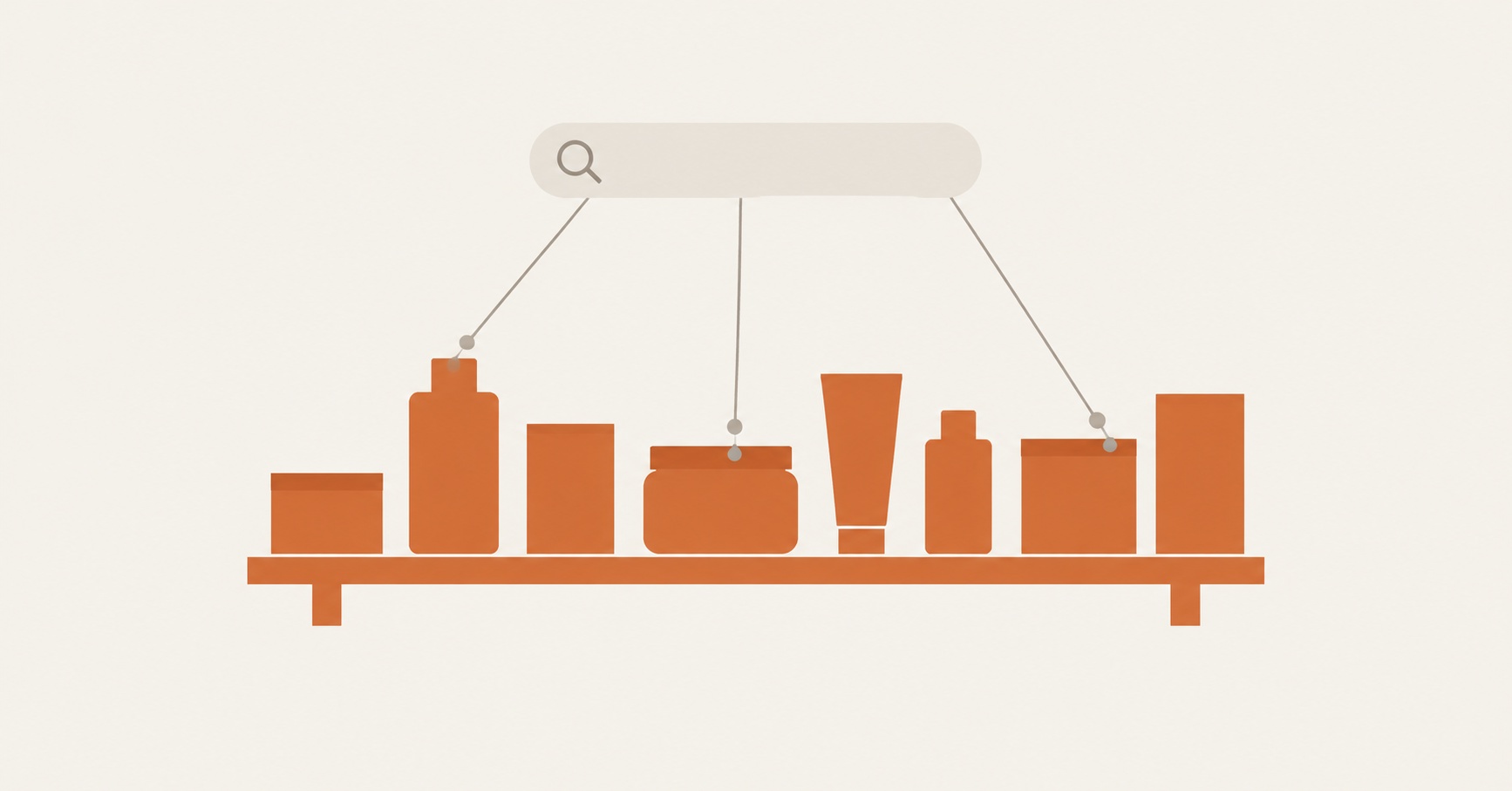
ChatGPT publishes no fixed shopping leaderboard. When a shopper asks for a compact sauna for an apartment, the answer may name products, compare options or request more details. Record whether your product appears, how it is described and where it appears when the answer provides an ordered list.
Separate answers generated without web search from answers that use retrieved pages, because they offer different evidence about visibility. Without search, an answer can reflect information learned during training, alongside the conversation and any other available context; with search, retrieved pages can contribute current information, although a citation does not prove that every product claim was checked.
Your pages are directly editable.
Check category understanding before changing copy
Ask ChatGPT what kind of product you sell and who it suits, then compare its answer with your intended category; if it calls an infrared sauna blanket a heated throw, inspect the title and opening description for missing distinctions.
Metrisque’s Category Fit compares products with their expected categories and marks a product Outside when its Gemini similarity score falls below 0.40; the draft’s latest stored read covered 53 stores and marked 13 of 923 products Outside. Those figures describe a diagnostic result; they do not establish that the products were absent from ChatGPT recommendations.
A mismatch gives you a specific page to inspect before you spend time seeking coverage or rewriting the entire catalog. However, category understanding remains a preliminary check because Metrisque’s synthetic tests did not find that similarity scores predicted recommendations.
Treat the proposed order as a practical workflow rather than a proven ranking formula: establish what the product is, make its useful details readable, check for contradictions, then investigate relevant external sources. Each stage should leave you with a concrete question you can test again under comparable conditions.
Rewrite descriptions that leave the product type unclear
The strongest evidence concerns category classification. In a synthetic test on stored products, models classified clear descriptions correctly 150 of 150 times, compared with 116 of 150 for vague descriptions. The vague descriptions produced 34 misclassifications; recommendation gains remain unproven.
Start the description with the product type, intended buyer and specifications that distinguish it from nearby alternatives. An opening such as “bring calm into every evening” leaves readers guessing until the page explains what is being sold.
Read the first 100 words of a priority product page without relying on its photographs or your familiarity with the catalog, asking whether a stranger could identify the product, explain its intended use and find the constraints that might rule it out.
Keep useful brand language after the identifying details, where it can support the buying decision without obscuring the basic facts, and rewrite claims only when you can support them with product documentation, especially where safety, testing or compatibility affects the purchase.
Answer practical buying questions on the page
Shoppers ask whether a product fits their space, works with existing equipment or has evidence supporting a testing claim. A page that states those answers in accessible text gives both shoppers and retrieval systems information they can inspect.
List the five questions your customer service team hears most often for a category, then locate each answer on the page; where an answer is missing, add a plain explanation using confirmed specifications and the same units used elsewhere in your catalog.
Metrisque’s Buyer Match is intended to check whether pages answer the questions buyers need resolved before choosing a product. You can also review this manually by comparing actual customer questions with visible page text, rather than guessing which phrases an assistant might prefer.
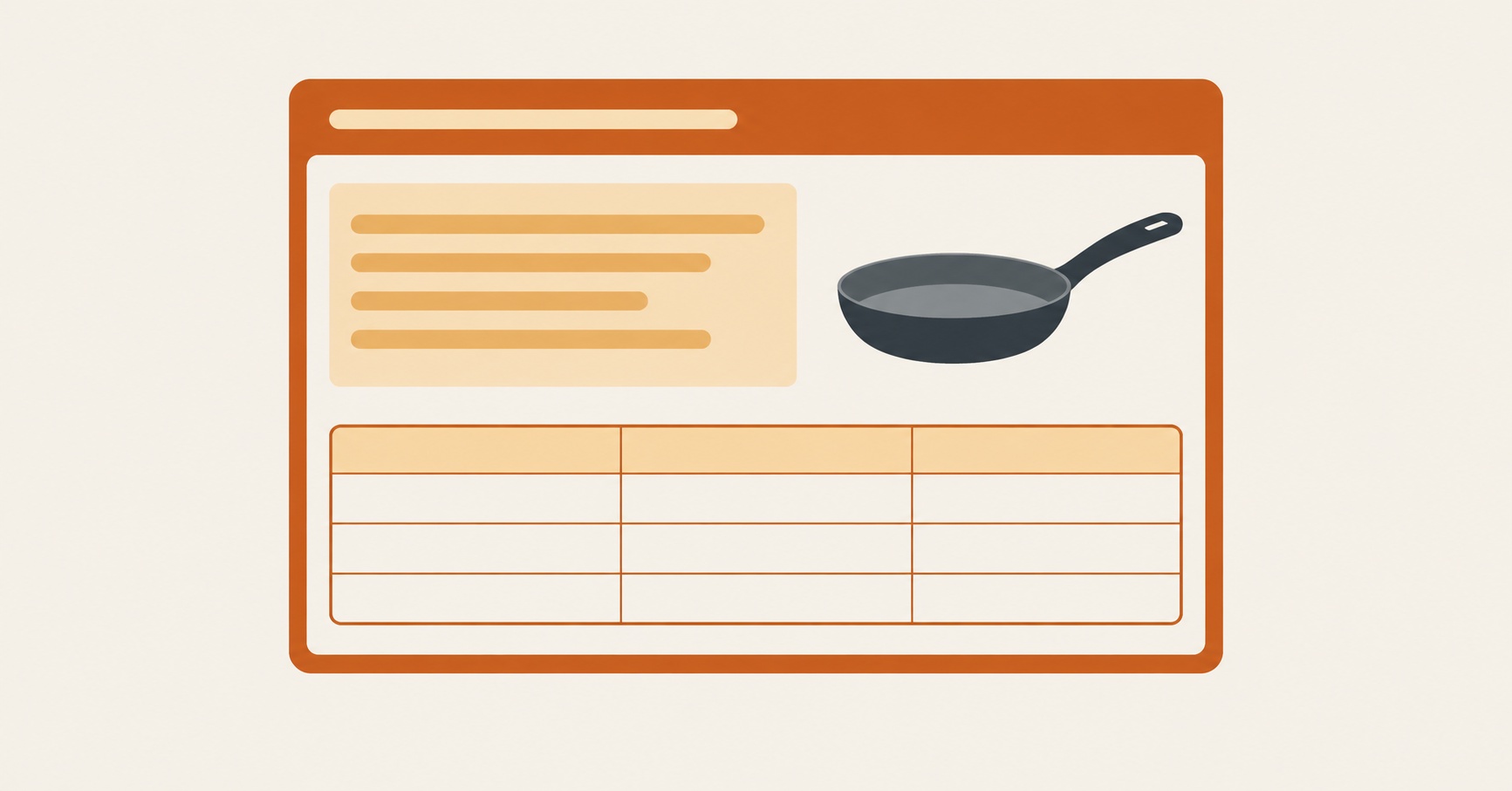
Important details should remain readable without depending entirely on an image or a separate document, although retrieval behavior varies by system. Collapsed tabs are not automatically unreadable; check what your storefront actually exposes before assuming a layout change will improve visibility.
Keep breadcrumbs and structured data consistent
Compare the product title, visible category, breadcrumb trail and Product structured data for contradictions that could confuse a reader. A trail through Home, Gifts and Under 50 dollars describes merchandising choices without necessarily identifying the product type.
Check whether the visible description and structured fields agree on the product’s identity, specifications and availability before adding more markup. Structured data is another representation of your product information, and it should accurately describe what a shopper can find on the page.
Metrisque’s synthetic title and breadcrumb tests produced mixed results across models and products, so the draft supports no universal ranking effect; fix obvious inconsistencies for accuracy, then test a limited set of pages before extending a change across the catalog.
For a closer review of page content, see what AI assistants read on a product page, especially when useful details exist but are difficult to locate.
Investigate sources that appear in shopping answers
Ask your buying questions with web search enabled and record the sources shown alongside the answer, including their relevance to the recommendation. Review sites, retailer listings, comparison articles and forums can provide useful leads, but appearance in a citation list does not guarantee influence over every recommendation.
Metrisque’s Competitors and Citations view is intended to help identify the competing products and sources appearing for the questions you track. Use that list to investigate missing or inaccurate product information and opportunities for relevant editorial coverage, rather than treating every cited site as a placement target.
When seeking a review or listing, provide accurate specifications and disclose commercial arrangements where required by the publisher or applicable rules. An independent reviewer may decline coverage or reach an unfavorable conclusion, and neither a listing nor a paid placement guarantees a ChatGPT recommendation.
External coverage can take months. Correct your own pages while investigating suitable sources, using the table to separate those tasks from their supporting evidence.
| Step | Evidence or limitation | Practical check | Time needed, editorial estimate |
|---|---|---|---|
| Check category understanding | Similarity did not predict recommendations in synthetic tests | Ask what the product is and compare the answer with its intended category | An hour for top products |
| Rewrite vague descriptions | Clear descriptions classified correctly 150 of 150 times; vague descriptions 116 of 150 | Read the first 100 words without relying on images | A day for 20 products |
| Answer buyer questions | Direct effect on recommendations not measured by Metrisque | Match common customer questions to visible answers | Half a day per category |
| Align breadcrumbs and structured data | Synthetic results varied across models and products | Compare visible information with structured fields | Varies with platform |
| Investigate cited sources | A mention does not guarantee a recommendation | Review relevant sources shown for buying questions | Months |
Table 1. Use these editorial time estimates to plan the work, not to predict recommendation gains; actual effort depends on the catalog and platform.
Measure changes with repeated questions
Choose 10 to 20 buying questions that reflect the products and constraints your customers actually discuss before making a purchase, saving their wording and recording whether web search was used, which model was selected and what appeared in the answer.
Ask each question at least three times before editing, then repeat under comparable conditions after the updated page becomes available to search, recording product mentions separately from recommendations because an answer can discuss your store without suggesting that someone buy from it.
A higher position in a single answer is weak evidence because the wording, sources and products can change between runs; repeated improvement is more useful, although a small before-and-after comparison cannot isolate your edit from model updates or other changes in retrieval.
Keep a change log so you can distinguish a description rewrite from a simultaneous change to stock, pricing or external coverage; Metrisque’s Action Plan stores a re-measure after a fix so the earlier and later observations can be reviewed together.
Our guide to generative engine optimization for online stores places these page checks within a broader visibility workflow. For help interpreting inconsistent results, read why AI answers change between runs before attributing every movement to your latest edit.
How long does it take to appear in ChatGPT?
There is no guaranteed timeline: edited pages may contribute to search-based answers after retrieval systems discover the changes, while training-based knowledge follows a different update process. Publication alone does not establish that a page has been retrieved, understood or selected for a particular shopping answer.
Keep checking the same relevant questions while recording which sources appear and whether the answer describes the product accurately. If nothing changes, revisit the missing evidence or category confusion rather than assuming that more repetition of a keyword will help.
Sources and evidence limits
The numerical findings above come from Metrisque stored runs: the Category Fit read covering 53 stores, the description clarity study covering 300 classifications, and synthetic title, breadcrumb and similarity tests, read on 16 November 2026. The draft provides no public study link or full protocol, so these results should be treated as internally reported evidence with limited scope.
Start with a free Metrisque check to identify which product information deserves a closer look before you edit your catalog.