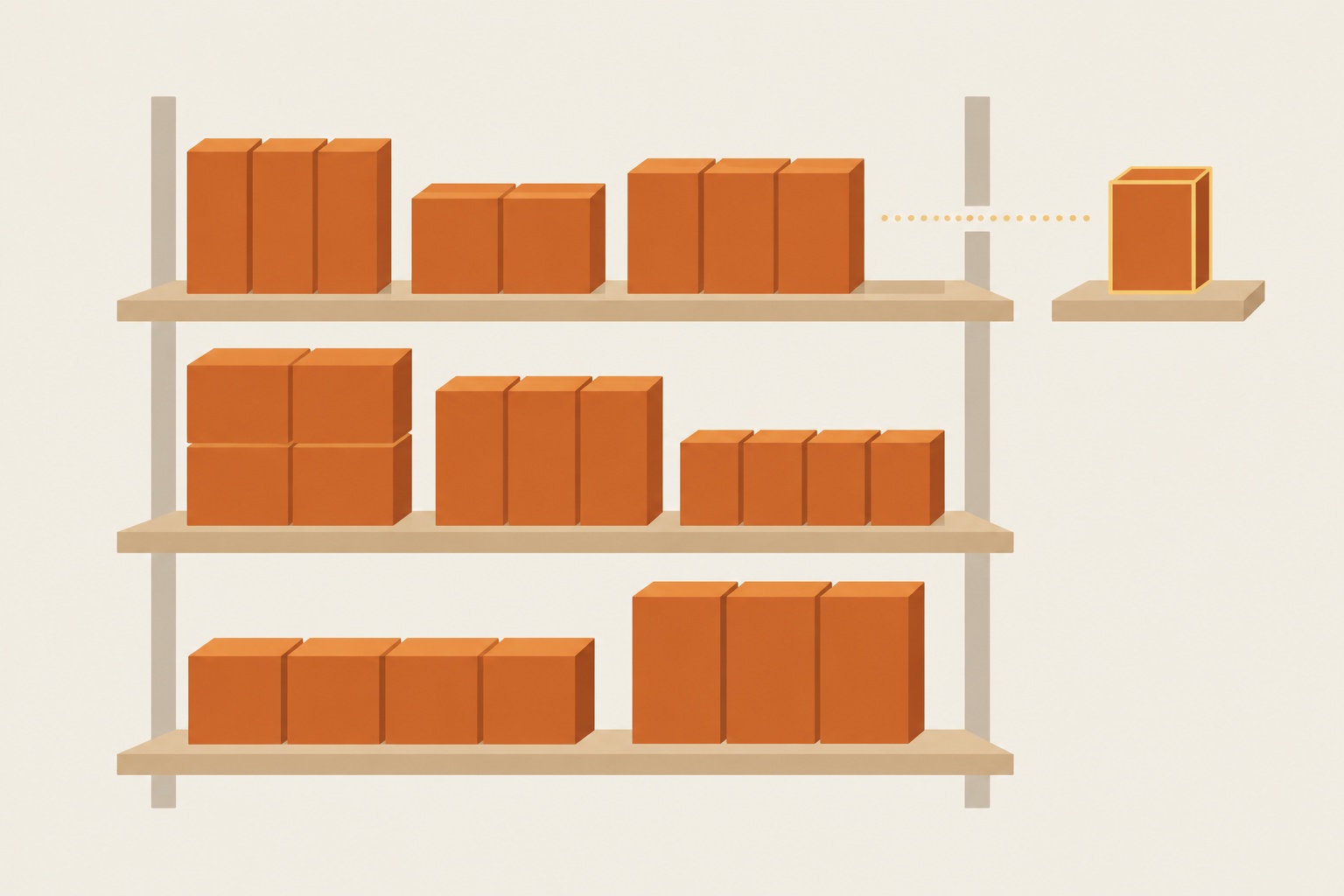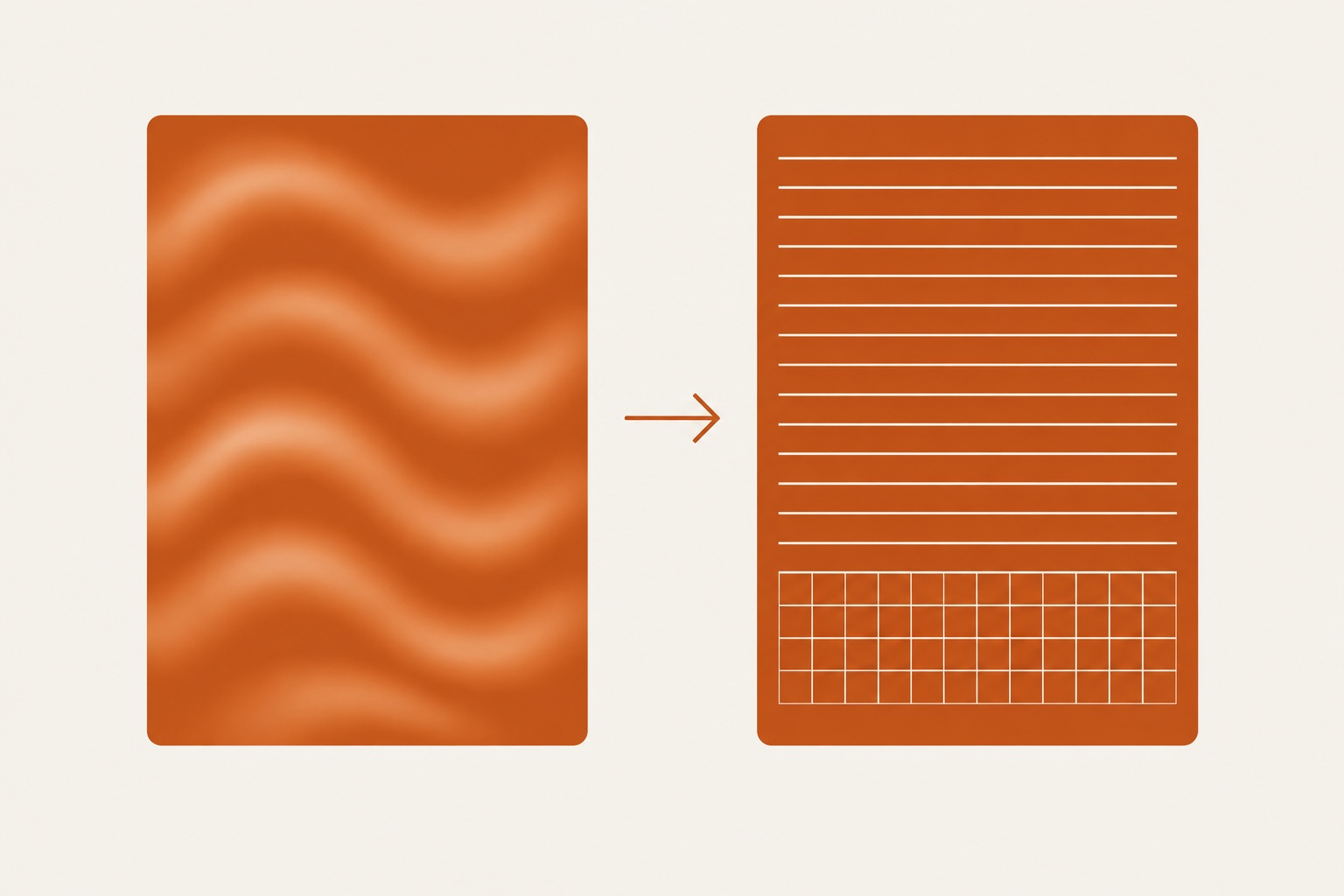
AI models file products more accurately when the description says plainly what the product is. In a Metrisque synthetic test of 300 classifications on stored products, models classified clear descriptions correctly 150 of 150 times, and vague ones correctly 116 of 150 times. The 34 misreads are products a model could offer for the wrong questions, or skip for the right ones.
Descriptions decide the filing
Before an assistant recommends a product, it has to decide what kind of product it is. A shopper asking for “the best magnesium supplement for sleep” will only hear about products the model files as magnesium supplements, so a product filed as a general wellness drink drops out before the comparison starts. The description is the longest stretch of text a store controls on a product page, and it is where a model reading the page finds most of the evidence it uses to file the product.
Titles and breadcrumbs say something about category too, but they are short. A description gives the model sentences to reason from, which is why it has the strongest measured effect of any page element Metrisque has tested. In synthetic runs on titles and breadcrumbs, effects varied by model and product, while descriptions gave a clean result.
What the study establishes
Metrisque reports a synthetic test of 300 category classifications, split between 150 clear descriptions and 150 vague descriptions. The published result measures whether models assigned the correct category, rather than whether they recommended products or influenced purchases.
A clear description names the product type, what it is for, and key specifications early in the copy. A vague description leads with mood or brand story, leaving the reader to infer what the item actually is.
Metrisque has not published a more detailed definition of clear versus vague, so this distinction is guidance rather than a reproducible scoring rubric. The available account also does not establish a paired design in which every product received both treatments, so the totals should not be presented as proof of that setup.
Synthetic classification tests can show a difference under the tested conditions without establishing how large that difference would be on live pages. Real assistants may also encounter titles, reviews, navigation and other sources, which means a description is only part of the available evidence.
Clear copy made no errors
| Description type | Classifications | Correct | Incorrect | Misread rate |
|---|---|---|---|---|
| Clear | 150 | 150 | 0 | 0% |
| Vague | 150 | 116 | 34 | 23% |
| All | 300 | 266 | 34 | 11% |
Table 1. Results from 300 synthetic category classifications, not a recommendation test; percentages are rounded to the nearest whole percent.
We use the term misread rate for the share of classifications in which a model files a product in the wrong category from its description. Clear descriptions had no recorded errors in 150 classifications, while vague descriptions had 34 errors in the same number of classifications. That is about 23 percent for the vague set, but it is not an estimate of errors across a store’s catalog.
The result supports making product identity explicit, while leaving open how the same wording would perform across other models or prompts. It does not show that rewriting a description will recover a corresponding share of recommendations, traffic or sales for a store.
What remains unknown about the misreads
Metrisque has not published a catalogue of the 34 misreads, including their wording, assigned categories or product families. We therefore cannot say which phrases caused those errors, or whether the same issue appeared repeatedly across the vague descriptions.
For an editorial review, look for wording that could describe neighboring categories without identifying the actual item being sold. A benefit such as better sleep might apply to several product types, so the opening should also name the form and intended use.
That is a practical writing check, not a measured explanation of the study’s errors or evidence about their distribution. The invented examples below demonstrate the check without claiming to reconstruct any of the descriptions in the synthetic test.
Worked rewrite: a supplement
We invented the examples below to show the pattern. They do not come from the study or from any customer store.
A vague version of a magnesium supplement description might read: “Unwind naturally. Our calming formula supports restful nights and helps you wake up refreshed, so you can take on every day feeling your best. Made with care from premium ingredients.” Nothing in that text says it is a supplement, what form it takes or what is in it, so an assistant trying to interpret the description has little explicit evidence to distinguish the intended product from a herbal tea, a sleep spray or a pillow mist.
A clear version reads: “Magnesium glycinate capsules, 120 per bottle, each providing 200 mg of elemental magnesium. For adults who want a magnesium supplement for sleep without fillers or added sugar. Any testing claims and usage instructions should match the verified product record before this illustrative copy reaches a live page.” The product type comes first, the dose and count follow, and plain words state the buyer and use, while the calming tone can stay further down the page where it supports the product identity instead of leaving a reader to infer that identity from a general promise.
Worked rewrite: a sauna
The same pattern applies to a large, expensive product, where a buyer usually asks an assistant four or five practical questions before committing. We invented this example too, and it does not describe any real sauna or store.
A vague version: “Transform your home into a personal retreat. Designed for those who value wellness and calm moments, our signature model brings warmth and serenity to any space.” A model reading this could reasonably file the product as a hot tub, a heated bench, a meditation pod or a piece of garden furniture.
A clear version: “A two-person infrared sauna for indoor use, 120 cm wide by 105 cm deep by 190 cm tall, and it runs on a standard household socket. Built from hemlock with carbon heating panels, it reaches 60 °C in about 15 minutes and suits apartments and small spare rooms.” The type, capacity, dimensions, power need and setting appear in the first two sentences, which are exactly the details a buyer in this category asks an assistant about.
Clear copy serves human buyers too
Clear copy is likely to help human buyers as well, for a practical reason that has nothing to do with models. A shopper arriving from an assistant’s answer has usually asked a specific question already, such as whether a sauna fits a spare room or whether a supplement contains fillers, and lands on the page looking for confirmation. A description that answers in its first two sentences gives that shopper the same certainty it gave the model, while a page that opens with mood makes them scroll for the fact that brought them there. Clear copy serves both readers at once, so a store does not have to choose between writing for people and writing for assistants.
The rewrite rule
The rule we use is the same for every category. Open with the product type in the words a shopper would use, with the form or format where relevant (capsules, powder, two-person, indoor). Use the next sentence or two to state who the product is for and the specifications that separate it from the nearest neighboring category. Benefits, brand story and tone come after that, where they help a human reader without confusing the model’s first reading.
Then check the result. Read only the first 100 words and ask whether a stranger could name the product type and the buyer. If yes, the description passes. For a catalog, Metrisque’s Category Fit offers a wider check. It marks products Outside when Gemini similarity to their category falls under 0.40. In the latest read for 53 stores, 13 of 923 products were Outside. Similarity is a check and not a forecast: in Metrisque’s synthetic tests, similarity scores did not predict recommendations, so confirm a rewrite with a recommendation read before and after the change. Our guide on why ChatGPT is not recommending your product shows where descriptions sit among the other causes.
Do clearer descriptions guarantee AI recommendations?
Clearer descriptions do not guarantee recommendations, because this study tested category classification rather than an assistant’s choice between competing products. Confirm any improvement by comparing answers to the same buying questions before and after the edited page becomes available.
Questions people ask
How should I write product descriptions for AI? Name the product type in the first sentence, state who it is for and give the specifications that separate it from neighboring categories. Put brand story and mood further down the page.
Do product descriptions affect AI product recommendations? In Metrisque’s synthetic test, models classified clear descriptions correctly 150 of 150 times and vague ones 116 of 150 times. A product filed in the wrong category is less likely to win a recommendation for its real category’s questions.
What makes a product description vague to an AI model? Copy built on benefits and mood that a dozen product types share, such as “supports restful nights”, without naming the product type or form. The model then has to guess the category from limited evidence.
Is writing for AI the same as LLM SEO? It is one part of it. LLM SEO covers how large language models read and represent content, and for product pages the description is the element with the clearest measured effect.
Sources
- Metrisque stored runs: description clarity study (300 classifications, synthetic test on stored products). title and breadcrumb synthetic tests. Category Fit latest read (13 of 923 Outside, 53 stores). synthetic similarity tests. Read on 16 November 2026.